
Today we sleep in a little longer and take the morning easy. After breakfast at Hotel Kebne, where we have spent two nights, we slowly check out and walk around Kiruna for a bit. It is bitterly cold. It feels like -5°. Although we are dressed warmly, we keep our tour of Kiruna rather short. But we definitely want to see the church.
It is built entirely of wood and is one of the largest wooden buildings in Sweden. In 2001 a nationwide vote chose it as the most beautiful building in the country built before 1950. It was built over 100 years ago, between 1909 and 1912, to plans by the architect Gustaf Wickman. The mining company LKAB paid for it. Its shape combines Norwegian stave churches with the Sami kåta, wide at the bottom and pointed at the top. The façade and roof are clad in wooden shingles. On the roof stand twelve gilded bronze figures by the sculptor Christian Eriksson, each two metres tall. They show people in different states of mind, such as love, humility, sorrow and despair.
Inside there is a huge organ and the abundance of wood is very impressive. The organ was built by the Hamburg organ builder Rudolph von Beckerath from 1955 to 1957. It has 41 speaking stops on four manuals and pedal.
Now, however, the church has to be moved, together with the town, in a few years, because ore is being mined underground. Because of the instability of the ground and the risk of collapse, the town has to be rebuilt a few kilometres away. For now the church still stands on its rise at the edge of the old centre, not far from the mine. LKAB has been mining iron ore in the Kiirunavaara mountain since the beginning of the 20th century, and today the mine is the largest underground iron ore mine in the world. Because of where the ore body lies, mining has to go ever deeper and ever closer to the town. The town also takes its name from the mountain. In Northern Sami it is called Gironvárri, from giron, rock ptarmigan, and várri, mountain.
The church has moved since then. On 19 and 20 August 2025 the building, weighing 672.4 tonnes and 40 metres wide, travelled in one piece on hydraulic trailers along a specially prepared five-kilometre route to its new site between the cemetery and the new centre. There it stands turned through 180 degrees and faces the town again. According to Svenska kyrkan (as of October 2026), the church is closed for groundwork around the new site and the restoration of the interior, and is due to reopen at some point in 2027.
After an ice-cold walk back to the car, we set off for our next accommodation. We are staying one more night in Kiruna, but we want to experience a bit of camping life, so we are spending it at a campsite nearby, Camp Alta. The site lies in the village of Alttajärvi on the lake of the same name, 15 kilometres from Kiruna according to Camp Alta. Luckily we can check in earlier than expected, and once again we are almost the only guests. We get a small, very cosy cabin.
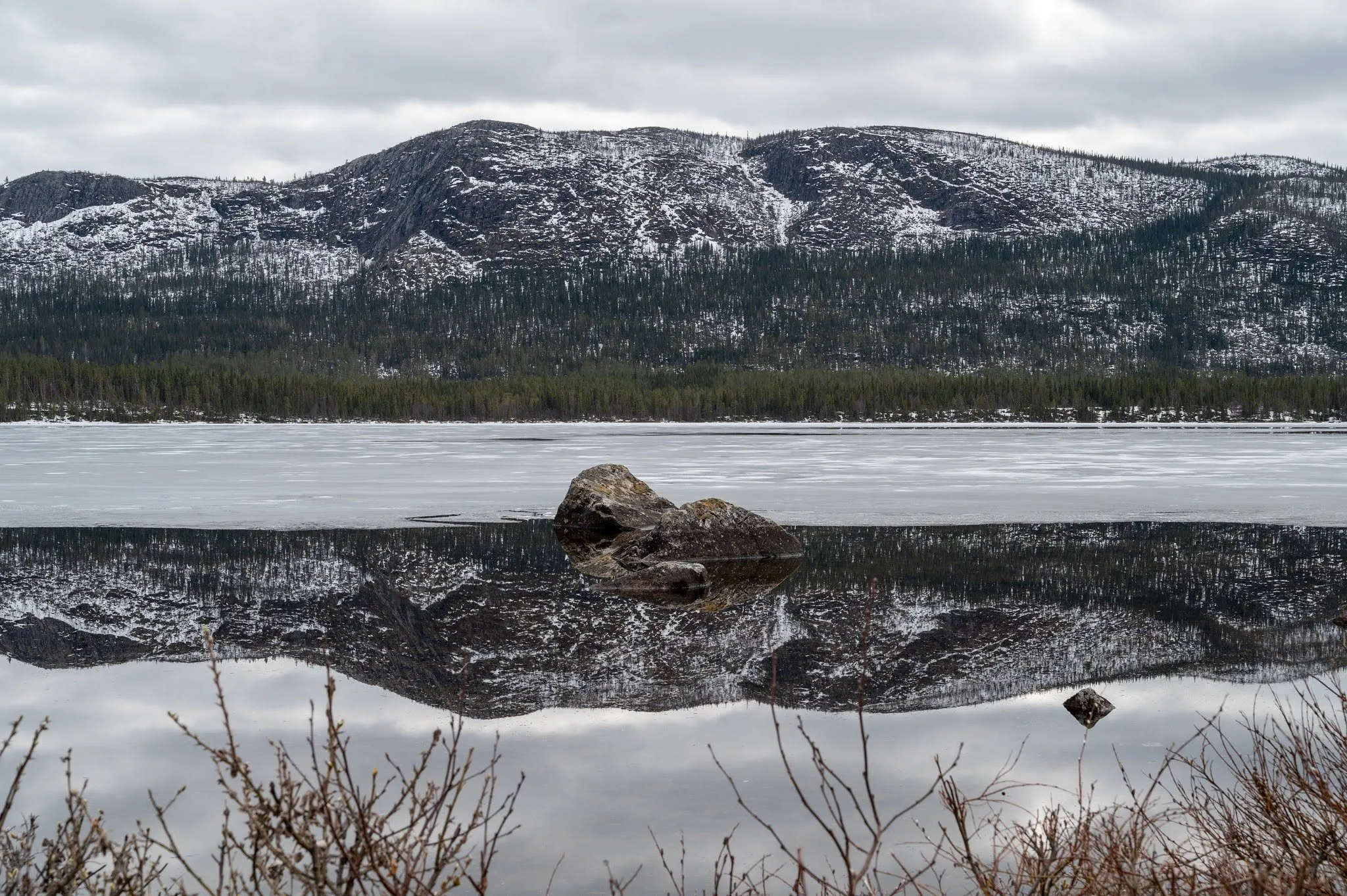
The campsite is right on the lake, which is still frozen. There is even a sauna out on the ice. Frozen lakes up here in May are normal: According to SMHI, the ice on the lakes of northern Sweden broke up at about the usual time in spring 2021. On Torneträsk near Abisko that happened on 11 June, five days after the 1991 to 2020 normal. We photograph the beautiful landscape, but are glad to be back in the warm soon.
We have a cosy afternoon. We look at our photos from yesterday, among them all the frozen lakes between Kiruna and Abisko. We also watch a few episodes of our series. For dinner we have a ready meal that we heat up in the microwave in the camp kitchen. It definitely feels good to have a quiet day for once.
Comments
Questions, tips or just a hello: We are happy about every message.