
We enjoy the morning in our cosy, warm little cabin and have a simple breakfast. After taking in the icy lake one more time and cleaning the cabin, we drive south again to Jokkmokk. It is about 200 kilometres, first on the E10 to Gällivare, then on the E45.
On the way we shop at a Coop in Gällivare. Ore is mined here too, as in Kiruna: Five kilometres north lies Malmberget, where iron ore has been mined on a large scale since the late 1880s. Because the mine needs the land, almost all of Malmberget is now being demolished or moved, and housing and important services are moving to Gällivare. We also stop at beautiful icy lakes. The ice is grey and covered in patches of snow, and at the shore it is only a thin, dark layer.
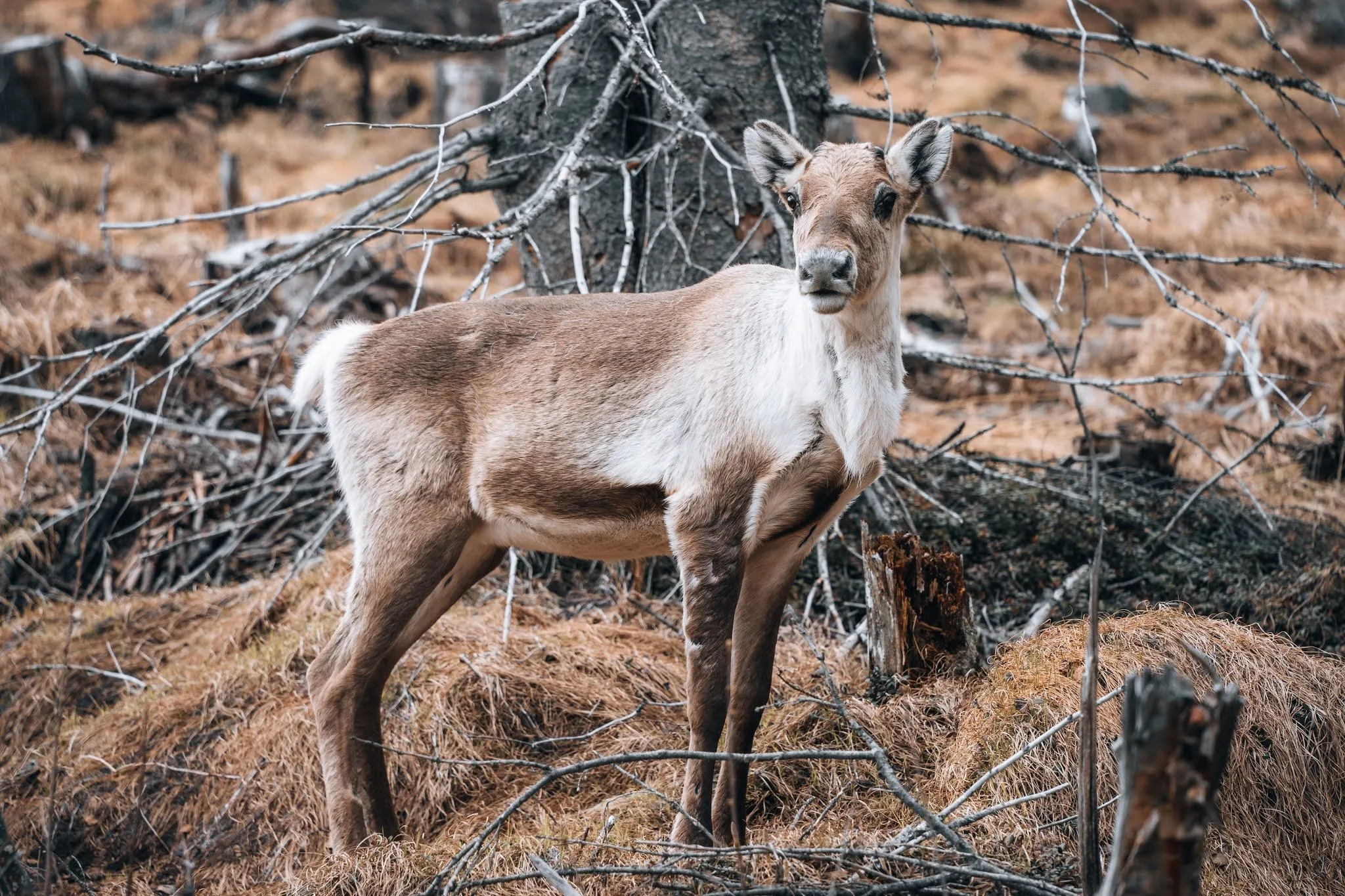
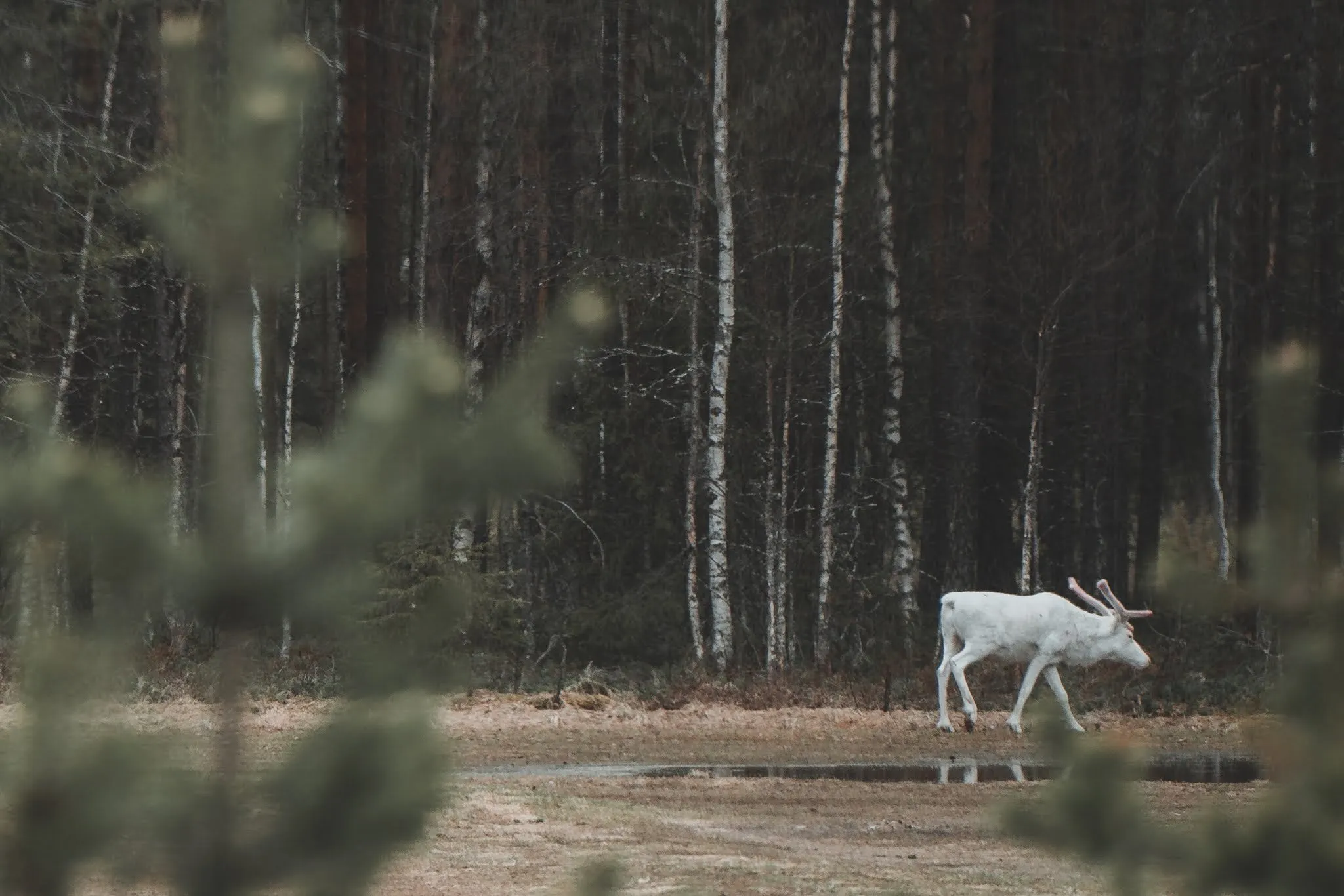
Along the road we come across a few more reindeer and two ptarmigan. The reindeer are easy to photograph and do not seem to be afraid of a few Swiss tourists. A group grazes on a snowfield between young pines, and a pale animal walks in the middle of the road.
According to Sametinget, reindeer herding in Sweden is reserved for the Sami, and only members of a sameby may practise it. Sameby literally means Sami village, but it is not a village. It is an area in which the reindeer owners organise the herding together. Whose animal it is can be told from its earmark, a combination of cuts in the right and the left ear. Reindeer calve in May, and in spring in particular they are sensitive to disturbance.
We had also wanted to visit Muddus National Park, but unfortunately the road to it was blocked because the snow was melting and we could not get through by car. The national park only seems to be accessible later in the year. According to the Swedish national parks website, the road to the main entrance at Skájdde is periodically closed in spring and early summer, when the ground becomes soft and unstable. Muddus, Muttos in Sami, has been a national park since 1942 and is Sweden’s largest forest national park, with old-growth coniferous forest, vast mires, deep ravines and the 42-metre Muddusfallet waterfall.
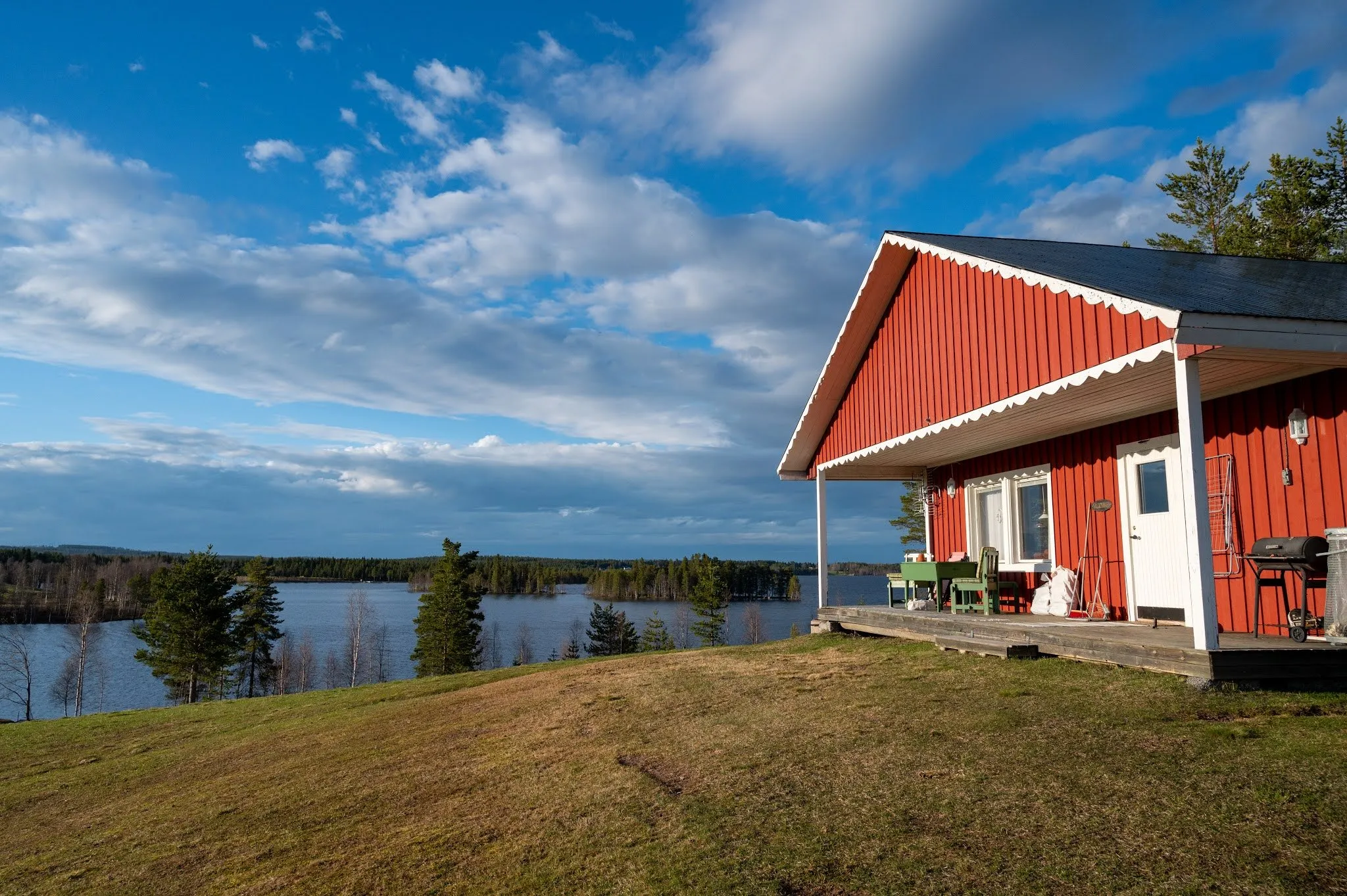
After a two-and-a-half-hour drive we arrive at Skabram Camping & Stugby, our next accommodation for two nights. The site lies in the hamlet of Skabram west of Jokkmokk, two kilometres from the town according to its website. We are welcomed very warmly by the owner. Our cabin is fairly large, with its own bathroom and kitchen, and there is even a living room. Right on the other side of the road there is a large lake with a sauna, Stor-Skabram. It is about three and a half kilometres long, and unlike the lake at Camp Alta this morning it is already free of ice.
We feel very much at home and are thinking about possibly extending our stay by one night. There are a few sights in Jokkmokk, and several national parks are within reach. Hopefully we can visit some of them.
Jokkmokk lies on the Lilla Luleälven, just north of the Arctic Circle. The name comes from Lule Sami: Jåhkåmåhkke is made up of jåhkå, stream, and måhkke, bend. As early as the 16th century the Sami gathered here every winter, and in 1605 the site became the official market and church site of Lule lappmark. Today the winter market is held every year on the first weekend of February. The town is also home to Ájtte, the Svenskt Fjäll- och Samemuseum, the main museum of Sami culture in Sweden.
The national parks of Sarek, Padjelanta and Stora Sjöfallet lie in Jokkmokk municipality, as does part of Muddus. Together with nature reserves and other areas, the four parks form the Laponia World Heritage Site, which UNESCO designated in 1996.
In the evening we edit our great reindeer photos and plan the next few days. For dinner there is rice with Indian sauce and salad.
Comments
Questions, tips or just a hello: We are happy about every message.